
Earned Settlement: What Is Proposed, and What Is Actually in Force
The Earned Settlement reform is proposed and not law. What has happened so far, what has not changed, and what governs your application today.
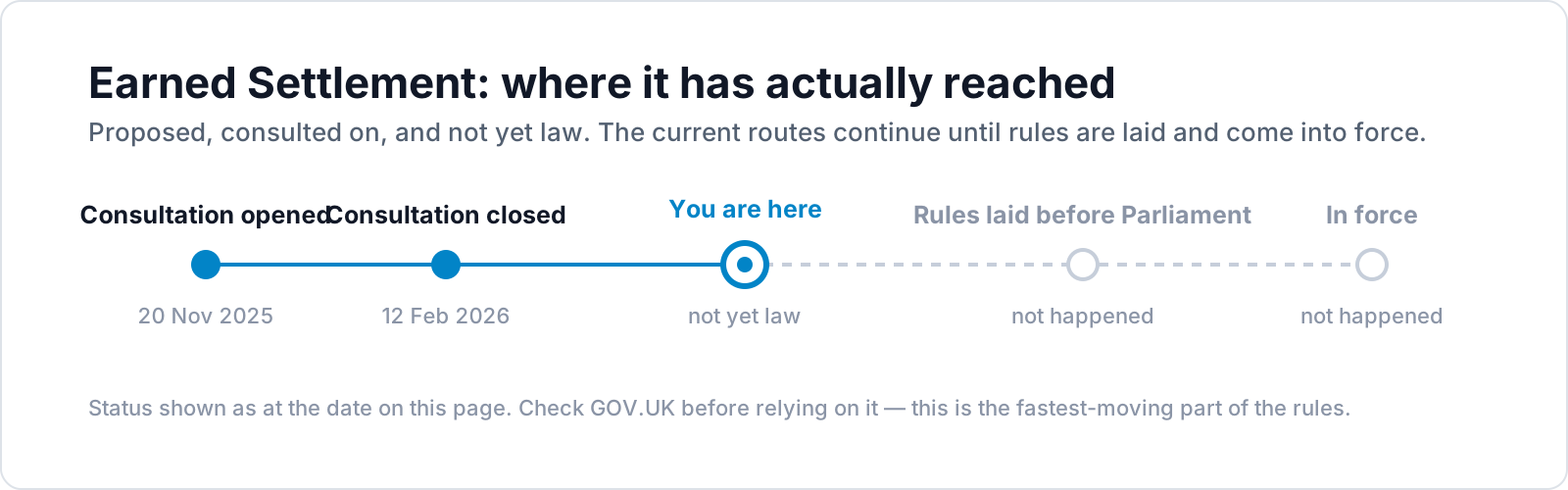
Status: proposed, not law. No Immigration Rules implementing Earned Settlement had been laid before Parliament at the date shown on this page. The existing settlement routes continue to operate as they are. Check GOV.UK before making any decision based on this page.
What has actually happened
The Government consulted on replacing the current settlement framework with a points-based Earned Settlement system. The consultation opened on 20 November 2025 and closed on 12 February 2026.
Since then: nothing that changes the law. Implementation has been discussed for autumn 2026, but a proposal becomes rules only when a Statement of Changes is laid before Parliament and comes into force. That has not happened.
What is proposed
The published proposals describe a shift from fixed qualifying periods to a system in which the time required for settlement varies according to defined criteria — with a longer baseline qualifying period than the current standard five years for many people.
The proposal most relevant to this site is that the separate long residence route would be removed, folded into the new framework rather than continuing alongside it.
We are deliberately not restating the detail of the proposals here. They are proposals: the detail can change between consultation and rules, and a page that reproduces a draft as though it were settled would be worse than no page.
What has not changed
As things stand:
- The ten-year long residence route operates under the existing Rules
- The five-year work routes operate as they do now
- The partner route operates as it does now
- The settlement calculators apply the rules currently in force
If you are counting towards settlement today, you are counting under the current rules.
Who this could affect
Anyone whose qualifying period would still be running when a reform comes into force — which is most people part-way through a route. That is precisely why the status matters more than the detail: what governs your application is the Rules in force when you apply.
Transitional arrangements are usually the most consequential part of any reform, and they are also usually the last part to be published.
What we will do
The rules behind our calculators are versioned, dated and tied to the sources they come from. When a Statement of Changes is laid, we will:
- Record the new rules as a new policy version with its effective date
- Keep the existing version, so calculations made under the old rules remain reproducible
- Update this page with what actually changed, not what was proposed
- Say plainly which version produced any given answer
Until then this page will say that the reform is proposed and not in force, because that is what is true.
Official sources
The only sources worth relying on for the status of this reform are primary ones — the Home Office consultation documents and any Statement of Changes to the Immigration Rules. Commentary is useful for orientation and should not be treated as authority.
Before you rely on this
VisaXplain is not a law firm and does not give immigration advice. This page reports the status of a proposed reform as at the date shown. It is not a prediction, and it is not a basis for delaying or accelerating an application. Take advice from a regulated adviser before you act.
Sources & Official Guidance References
Official Home Office policy sources verified by VisaExplain Editorial Engine.
Educational guidance only. Not legal advice. UK Immigration Rules change frequently — always verify eligibility criteria against current Home Office documentation on GOV.UK.