
Continuous Residence and Absences from the UK
How the absence limit is measured across any rolling twelve-month period, and the difference between a gap that delays your settlement date and one that breaks it.
Continuous residence is the requirement that catches more settlement applications than any other, because it is the one people assume they have met.
It is not a question of whether you held a visa. It is whether the whole qualifying period holds together as one unbroken stretch under Appendix Continuous Residence — and there are two separate ways it can fail.
The absence limit
There is a cap on how much of your qualifying period you may spend outside the UK.
The part that surprises people is how it is measured. The limit is applied across any rolling twelve-month period — not per calendar year, and not averaged over the whole qualifying period. Every possible twelve-month window is tested, and the one that fails is the one that counts.
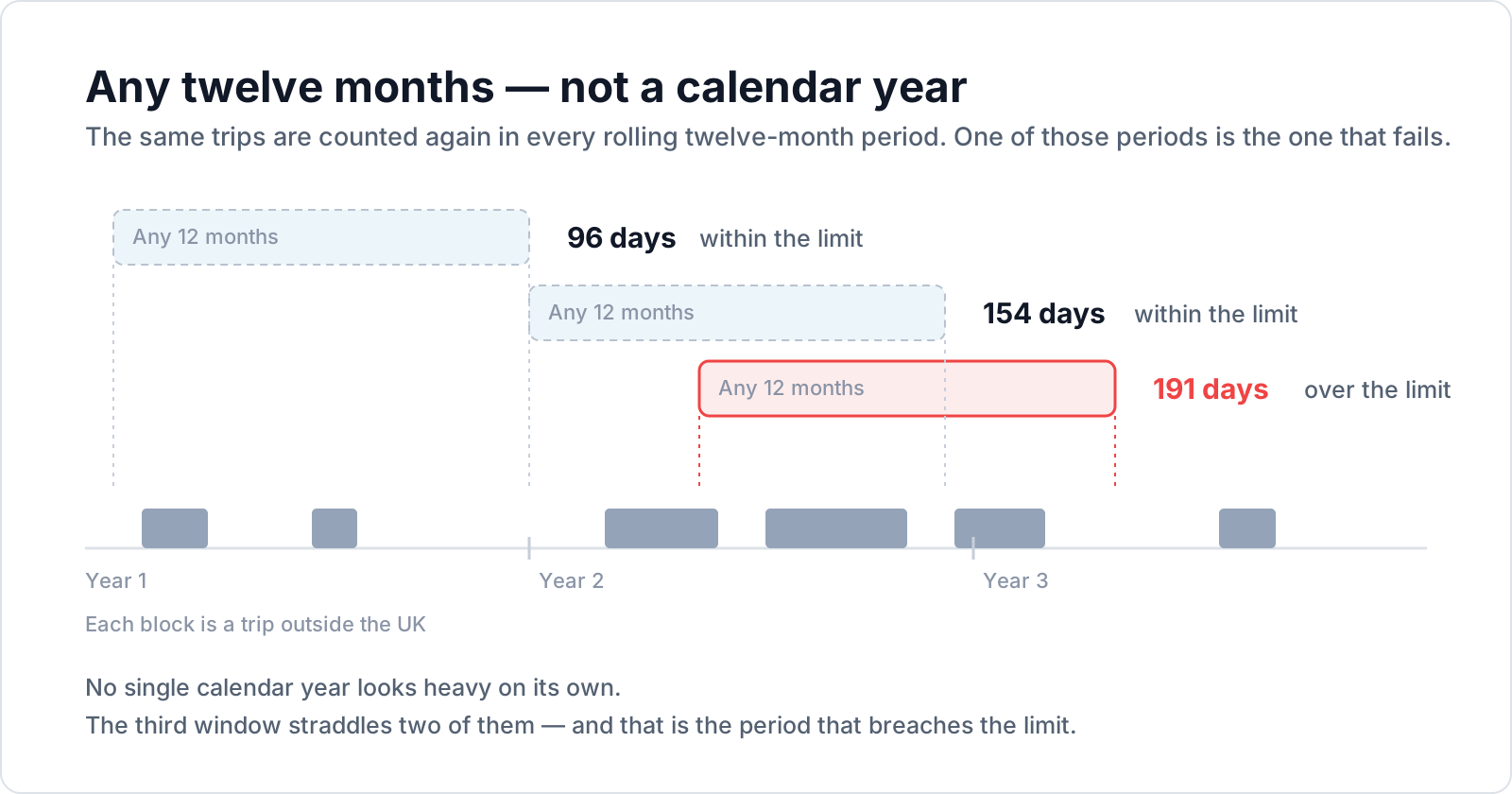
The diagram shows the trap. Look at the trips year by year and nothing seems excessive. Slide a twelve-month window across the same trips and one position picks up a cluster that breaches the limit. Nothing about the travel changed — only the window it was measured in.
This is why "I was only away a few months each year" is not a safe answer, and why a calculator that tests every window is more reliable than adding up a passport.
What changed on 11 April 2024
The rules on absences were revised, and applications can span the change. Periods before that date and periods after it are assessed differently, which means a single ten-year history may need to be measured two ways and both results respected.
If your qualifying period straddles that date, check which rules apply to which part rather than applying one set to the whole.
Gaps in permission
The second way continuity fails is a gap between one permission ending and the next beginning.
Two different things can happen, and confusing them is the most common misunderstanding on the long residence route:
The gap is excluded but continuity survives. The days do not count towards your qualifying period, so your eligibility date moves later — but the period before and after still joins up. You are still on the route.
Continuity is broken. The clock restarts. Everything before the gap is lost for this purpose.
Which one applies depends on the circumstances of the gap: whether an application was made in time, whether permission continued by operation of law while it was being decided, and whether the Rules recognise the situation as one to be disregarded.
Permitted absences and exceptions
Not every day outside the UK is treated the same. The Rules recognise circumstances in which an absence is disregarded — and the list is specific, not a general test of whether the reason was a good one.
Two cautions:
- Being outside the UK for a serious reason does not automatically mean the absence is disregarded. The reason has to fall within the Rules.
- Whether a discretionary exception is granted is a decision for a caseworker. No tool can tell you the answer, and anyone who says otherwise is guessing.
What breaks it, in practice
The failures that come up most often:
- A cluster of trips that breaches the limit in one rolling window, while every calendar year looks fine
- A gap between visas where the next application was made late
- Assuming time on a visitor visa counts towards the qualifying period
- Counting the qualifying period from arrival rather than from the first lawful permission
Work out your own position
Continuous residence is arithmetic on your own dates. The calculators apply the current rules to the visas and trips you enter and show the clause behind each figure:
- Long Residence calculator — the ten-year route
- Skilled Worker ILR calculator — the five-year work route
- Settlement routes overview — if you are not sure which route you are on
Before you rely on this
VisaXplain is not a law firm and does not give immigration advice. This page explains published rules; it cannot decide your case, and it does not know facts you have not entered. Where the Rules leave a decision to a caseworker, this site will tell you so rather than guess. Check the official GOV.UK guidance and take advice from a regulated adviser before you act.
Sources & Official Guidance References
Official Home Office policy sources verified by VisaExplain Editorial Engine.
Educational guidance only. Not legal advice. UK Immigration Rules change frequently — always verify eligibility criteria against current Home Office documentation on GOV.UK.